
Been told your wisdom tooth needs to come out, and quietly assumed it means a hospital referral and a long wait? It isn’t always the case. Dr Mario Correia removes wisdom teeth and carries out surgical extractions here in Godalming, planned with a 3D scan so he can see exactly where the roots sit before he starts.
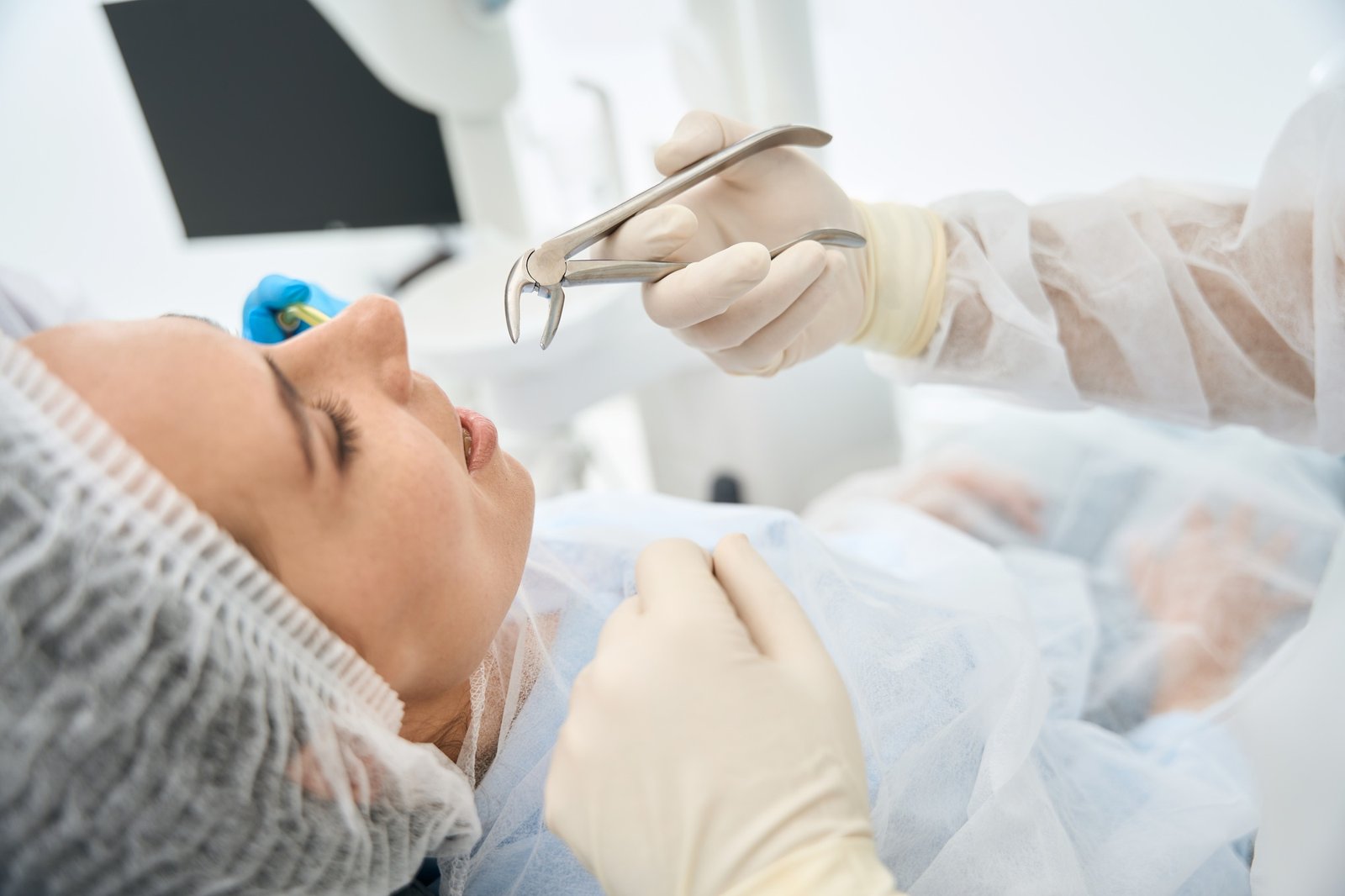
Wisdom tooth removal is the extraction of one or more third molars, the last teeth at the back of the mouth. At Lakeside Dental Practice in Godalming, wisdom teeth and other surgical extractions are carried out in the practice by Dr Mario Correia, who is completing an MSc in Oral Surgery at the University of Plymouth.
Wisdom teeth usually arrive between your late teens and mid-twenties, long after the rest of your teeth have claimed the space. Plenty come through without any fuss. Others get stuck at an angle (impacted) or only half break through the gum.
A half-erupted tooth is hard to clean, so food and bacteria collect around it. That can lead to repeated gum infections called pericoronitis, decay in the wisdom tooth or the tooth next to it, and that dull ache at the back of the jaw that comes and goes for months.
It’s one of those problems people tend to put up with for far longer than they need to.
Routine extractions from £275.
Swelling or severe pain from a wisdom tooth? Call us today.
On-site CBCT 3D scanning for surgical planning.
Not every wisdom tooth needs removing. If yours isn’t causing problems, it’s usually best left alone and kept an eye on at your check-ups. If your face is swelling or you feel unwell, call us on 01483 421376 straight away.
For an occasional flare-up, better cleaning and a hygiene visit may be enough. We’ll tell you honestly if that’s a sensible option.
Most wisdom teeth that need to come out can be removed in the practice under local anaesthetic.
A small number of cases, for example where a tooth is very deep or a patient has complex medical needs, are better handled in hospital. If that applies to you, Dr Correia will explain why.
[Confirm with Dr Correia whether coronectomy is offered. Delete this section if not.]
The roots of lower wisdom teeth often sit close to the nerve that gives feeling to your lower lip and chin. A flat X-ray can’t always show how close.
Where it’s needed, we take a CBCT scan on our own scanner, here in the practice. It shows the tooth, its roots and the nerve in 3D, so Dr Correia can plan the safest approach and talk you through your personal risks before you agree to anything.
[Dr Correia: one or two lines on why you enjoy oral surgery, or what you tell nervous patients before a wisdom tooth comes out, in your own words.]
Dr Mario Correia is the Principal Dentist and Clinical Lead at Lakeside Dental Practice (GDC 83096). He qualified at Goa University and has since completed an MSc in Primary Dental Care at the University of Kent, an MSc in Fixed and Removable Prosthodontics at King’s College London, a Diploma in Implant Dentistry at UCL, and the Diploma in Primary Care Dentistry and MFD with the Royal College of Surgeons in Ireland. He is currently completing an MSc in Oral Surgery at the University of Plymouth.
His advanced surgical training, including surgical extractions and wisdom tooth removal, has been completed through his postgraduate studies at the University of Plymouth. He is not on the GDC specialist list for oral surgery.
He is a member of the British Dental Association and the British Society of Dental Sleep Medicine, and an Associate Fellow of the College of General Dentistry. Read more about Dr Correia.
That’s completely understandable, and you’re far from alone. We explain each step before we do it (more on our approach for nervous patients), allow longer appointments where needed and go at your pace. The area is fully numbed, so you should feel pressure and pushing rather than sharp pain.
Sedation may be available by arrangement, subject to a clinical assessment. [Confirm sedation type and details before publishing.]
The fee depends on how the tooth is positioned and how much surgery is involved. You’ll get a written estimate after your assessment, and finance is available. See our private fees page for the full list.
We examine the tooth and take X-rays, plus a CBCT scan if the roots may be near the nerve. You’ll hear your options, risks and costs.
Eat beforehand unless you’ve been told otherwise. The area is numbed with local anaesthetic and we check it’s fully numb before starting.
Some wisdom teeth come out in one piece. Others need a small cut in the gum, and the tooth is sometimes divided into sections so it comes out with less force. You’ll feel pressure, and we’ll keep talking you through it.
Dissolving stitches may be placed. You’ll go home with written aftercare instructions and a number to call.
Swelling and stiffness usually peak around the second or third day, then settle over a week or so. Soft food, painkillers you can normally take and no smoking will help the socket heal.
These include dry socket (a painful socket a few days after surgery), infection, bleeding and, for lower wisdom teeth, a risk of temporary or, rarely, permanent numbness of the lip, chin or tongue. Dr Correia will explain your individual risks, based on your scan.
“I recently saw Dr Mario for a wisdom tooth infection, I was in a lot of pain and discomfort, he was able to see me first thing on the next day. He first treated the infection with antibiotics and then extracted the tooth 2 days later… I was nervous, Dr Mario was very empathetic, caring and understanding.”
Catherine B., Google review
No. You can book a consultation directly. Dentists can also refer patients to us through our referral page.
At Lakeside Dental Practice, typical wisdom tooth removal costs £424 to £683, and surgical extractions start from £485. Your exact fee is confirmed after an assessment.
Yes. Wisdom teeth are usually removed under local anaesthetic, so you're awake but the area is numb. Sedation may be available by arrangement, subject to assessment.
Many people take a day or two off, depending on how involved the surgery is and the kind of work they do. We'll give you an idea at your assessment.
Usually not. Wisdom teeth that aren't causing problems are normally left alone and checked at your routine appointments.
Dry socket is when the blood clot in the socket is lost or breaks down, leaving the bone exposed. It causes pain a few days after the extraction. Call us if this happens, as we can dress the socket to ease it.